If you’re thinking about buying a mobile home, one of the first questions that comes up is:
What credit score do you actually need to qualify?
The answer depends on a few key factors, including the type of loan you use, whether you’re buying land with the home, and the lender you work with. But overall, manufactured homes are often more flexible than traditional real estate when it comes to credit requirements.
That flexibility is one of the reasons mobile homes continue to be one of the most accessible paths to homeownership in 2026.
Typical Credit Score Requirements
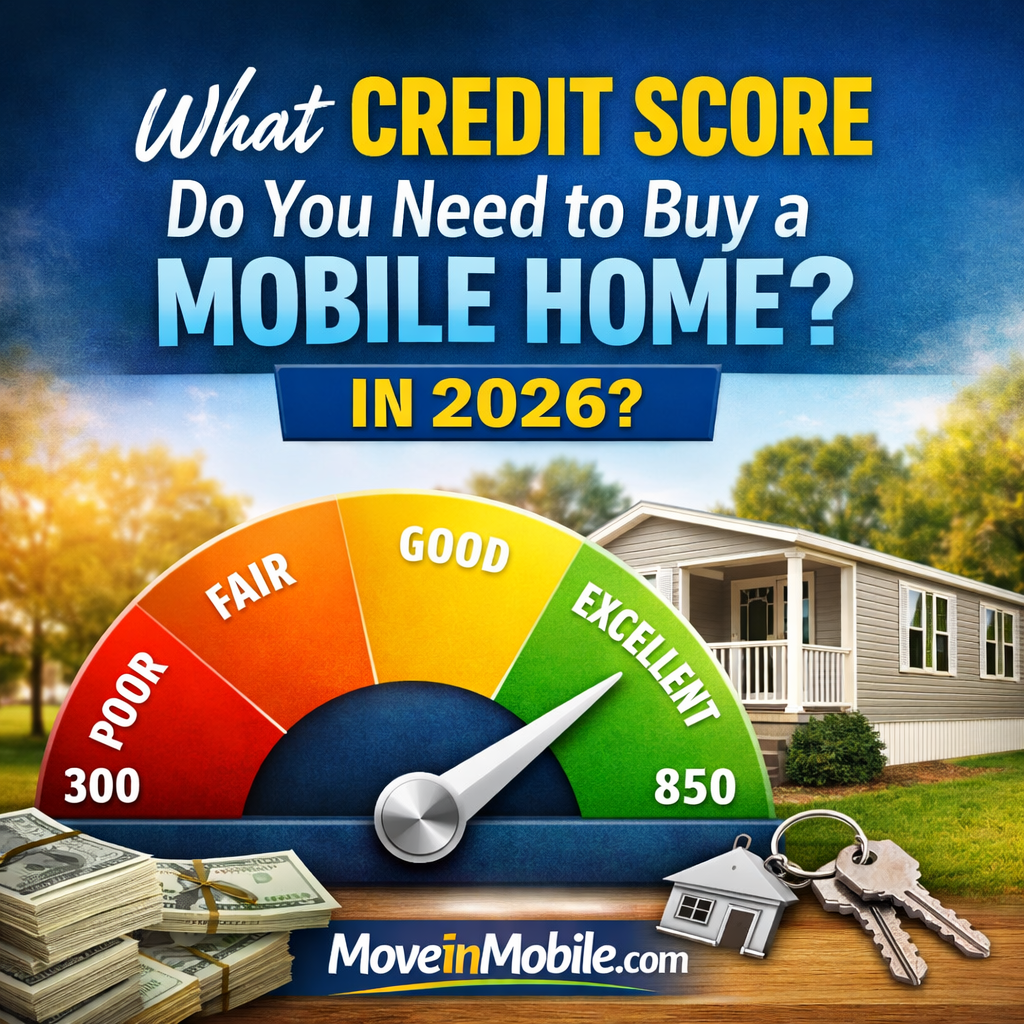
Most buyers can expect general credit score ranges like:
- 580–620+ for FHA or government-backed loans
- 600–650+ for many chattel (home-only) loans
- 650+ for more competitive interest rates
While these are common benchmarks, some lenders will work with lower scores depending on income, down payment, and overall financial profile.
This means buyers who may not qualify for traditional mortgages can still have strong opportunities in the manufactured housing market.
Why Mobile Home Financing Is Different
Mobile home financing works differently than traditional home loans because the home may be classified as personal property rather than real estate.
There are two main types of financing:
- Chattel loans (home only, usually in parks)
- Real estate loans (home + land)
Each comes with different requirements, interest rates, and credit expectations.
If you’re still learning how financing works, it’s worth reading Mobile Home Financing: What Every First-Time Buyer Needs to Know, which breaks down loan types and what buyers should expect.
Credit Score Isn’t the Only Thing That Matters
While credit score is important, it’s not the only factor lenders consider.
Buyers are also evaluated based on:
- income stability
- debt-to-income ratio
- employment history
- down payment amount
In many cases, a strong income and a larger down payment can offset a lower credit score.
This is why buyers should focus on their overall financial picture, not just their score.
How Monthly Costs Affect Loan Approval
Lenders also look closely at your expected monthly housing costs, including:
- loan payment
- lot rent (if applicable)
- utilities
- insurance
Understanding these costs ahead of time can improve your chances of approval.
If you’re still figuring out the full cost of ownership, The Real Cost of Mobile Home Ownership vs Renting in 2025 explains how monthly expenses add up and what buyers should plan for.
Buyers With Lower Credit Still Have Options
One of the biggest advantages of manufactured housing is that it creates opportunities for buyers who might not qualify for traditional home loans.
Many lenders specialize in manufactured housing and are willing to work with buyers who are rebuilding credit or have non-traditional financial profiles.
This flexibility is one of the reasons mobile homes continue to play a major role in affordable housing across the country.
Finding Homes That Match Your Budget
Once you understand your financing options and credit range, the next step is finding homes that fit your budget.
Because listings are often spread across different platforms, many buyers now use centralized marketplaces like MoveInMobile to compare homes, prices, and locations more easily.
Being able to view multiple listings in one place makes it much easier to narrow down options and move forward with confidence.
The Bottom Line
So what credit score do you need to buy a mobile home in 2026?
For most buyers, a score in the 580–650+ range is enough to qualify for financing, depending on the loan type and financial situation.
More importantly, manufactured housing offers flexibility that many traditional homebuyers don’t have. With the right preparation, buyers with a wide range of credit profiles can still achieve homeownership.